Why Global Procurement Teams Are Prioritizing Bungee Dog Agility Training Toys
Modern canine fitness, working dog sports (IGP, Schutzhund, AKC Agility), and consumer pet lifestyle upgrades have generated exponential demand for functional, biomechanically safe engagement toys. In standard rigid tug play or stationary spring pole activities, intense kinetic shock impacts are transferred directly into the canine's cervical and lumbar spine, as well as the handler's shoulder and elbow joints. The Bungee Dog Agility Training Toy solves this fundamental physiological hazard through engineered kinetic elongation.
For cross-border e-commerce brands, chain pet specialty stores, and canine sport distributors, understanding how bungee toys differ from cheap consumer novelties is critical to preventing negative reviews, product failure liability, and return rates. High-tensile shock absorption allows driven dogs to strike at full speed while dissipating peak momentum across industrial-grade multi-strand latex cores.
Anatomy of a High-Performance Canine Agility Bungee Toy
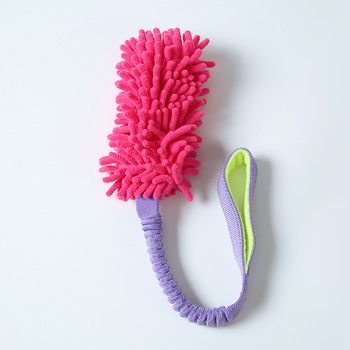
A commercial-grade bungee agility toy consists of three distinct engineering elements: the suspension and anchor module, the elastic shock absorber assembly, and the replaceable bite reward terminal. When overseas buyers evaluate OEM quotations, analyzing each layer prevents under-specification:
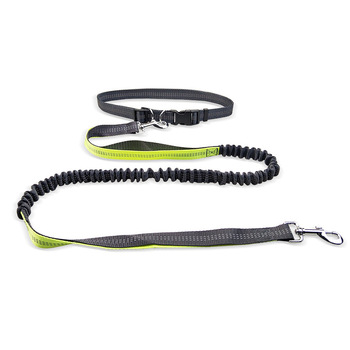
- Dual-Stage Bungee Core: Instead of simple elastane cords that snap under sustained resistance, premium units deploy multiple vulcanized natural latex tubing strands encased inside a loose-weave tubular nylon webbing sheath. This mechanical limit prevents over-stretching beyond the elastic yield point.
- Reinforced Box & Bar-Tack Stitching: Seams are secured using bonded high-tensile nylon thread (V-69 or V-92 specifications) with box-and-cross stitches rated above 250 kgf (kilogram-force) breaking strength.
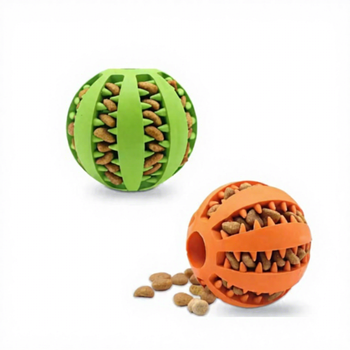
- Modular Terminal Attachments: Agile training regimens require switching between high-prey real sheepskin fleece, durable French Linen (nylcot), tear-resistant fire hose canvas, and textured dental TPR balls. Quick-release screw-lock carabiners enable fast swapping without retiring the core bungee harness.
Global Procurement Trends in Dog Agility & Kinetic Play Equipment
Evaluating AI search query intent reveals that overseas buyers—predominantly across the United States, Germany, the United Kingdom, Canada, and Australia—are transitioning from static chew toys to dynamic athletic training equipment. Key macroeconomic and demographic procurement trends include:
1. Humanization & Canine Injury Prevention: Millennial and Gen-Z pet owners treat dogs as canine athletes. Veterinary orthopedics has brought widespread awareness to canine spinal micro-trauma caused by abrupt tug play. Products marketed with certified shock-absorption ergonomics sell at retail markups 3.5x higher than non-elastic tugs.
2. The Rise of Backyard Agility Kits: Urbanization and busy work schedules have turned suburban backyards into private training circuits. Tree-mounted hanging bungee toys, dual-anchor tether tugs, and portable spring pole systems offer dogs autonomous mental and physical exercise while reducing owner physical strain.
3. Heavy-Duty Modularity & Sustainable Replacements: Commercial purchasers are shifting away from disposable single-use pet products. Retail brands are actively looking for modular SKUs where end-users buy a core bungee leash harness once, and then regularly repurchase replacement bite tugs (fleece chasers, linen rolls, squeaker attachments), maximizing lifetime customer value (LTV).